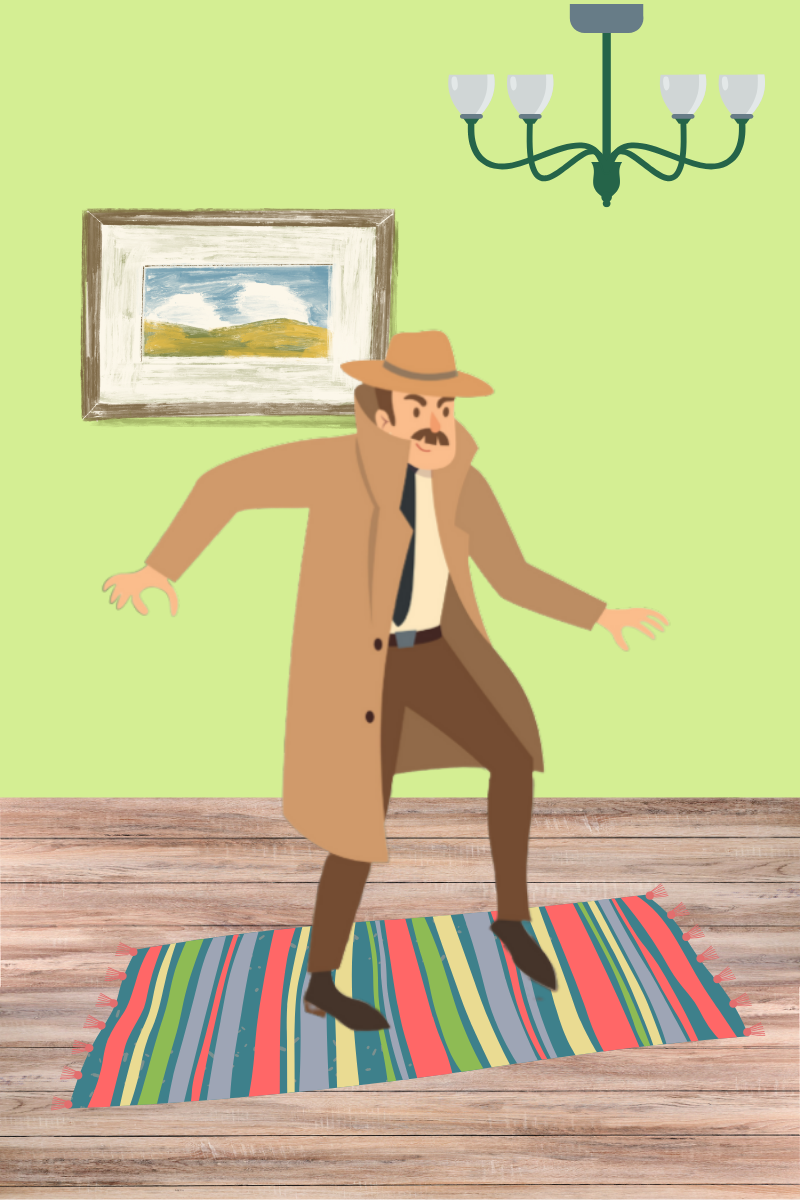
Ned’s in the house, so watch where you step. What house, what crime scene fibers, you ask? Check out the fun details in Mishaps. Old houses are the best; filled with ghosts of residents past, creaky noises, and things to fix. Maybe also clues that could put you away for life. Like an old carpet. Did any of the kooky characters step on a floor covering? Dig deeper and find out!
🔬 🪸 Microscopic Examination
Turns out, any unusually shaped fiber from an old area rug or carpet at a crime scene could trace right back to the murderer. Do criminals watch their step? If the right fibers turn up on the victim, that is. Who knew that merely stepping into a room could lead to you cooling your heels in the clink? Visiting an old house by the ocean could “send you up the river” if you aren’t careful. So maybe don’t gift the police your shoes!!!
🏠🏖️ An Old Carpet, You Say? Watch Your Step!
Sherri was found in a bedroom on a hardwood floor. But all the guests were in the great hall. Maybe the rugs were the source of that musty smell I endured during my first encounter with the visitors—slash—suspects. I have to say, this case had some of the least clever suspects I’ve seen so far. They all seemed incapable of avoiding silly accidents. Did one of them trip over an ugly red rug and then go murder Sherri? It’s up to you to find out. Or better yet, write that ending yourself.
🧩🌊 It’s All in the Details
It’s not up to me. I rely on Bob the Crime Scene Tech. His handy-dandy microscope compares color and diameter. Well, one of his microscopes, anyway. To do this kind of work, you need a comparison microscope. Bob looks for lengthwise striations or pitting on the surface of fibers. What does that have to do with Mishaps? You’ll have to read and find out! Maybe something. Maybe something you run with, although I wouldn’t recommend actually running in the house.
Catch you on the flip side!
—Ned
🔍 🪶 Crime Scene Tech Tip:
Synthetic carpet fibers don’t always shine. That’s because manufacturers add delustering particles—usually titanium dioxide—during production. These microscopic bits roughen or “pit” the fiber’s surface, scattering light and reducing that plastic-like sheen. Under a microscope, those tiny pits can help techs tell one fiber from another. And maybe, just maybe, help Bob and me find our killer.


Ned wants to know… What do you think? Leave your evidence below. 🕵️♂️