Detective Ned here.
Thinking about past cases, death, and strange happenings. In this case, determining density and its connection to death. I recently found myself knee-deep in sand and strange stories while investigating what some call “the Mishaps Case.” Sun, surf, and suspects. Sounds like a dream, right? Except every single vacationer had their own odd injury. If you had to talk to the group of weirdos I did, you would run in the opposite direction from the sand and sunsets.
A trip to the mountains anyone?
🕵️ A Beach Getaway… With a Body Count
Anyway, these weren’t just klutzy beach goers. Something was off. And when a woman turned up dead under a makeshift sheet fort, things took a darker turn. Picture this: all the suspects had some strange accident happen to them. But only Sherri died. What is the heavy truth about that?
How is that possible, you ask? Well, in a way, that is up to you. I, Detective Ned, didn’t write the ending to that case, I found out what happened. Or did I? You are in control. Go ahead. Be weird. Be creative. Send it in!
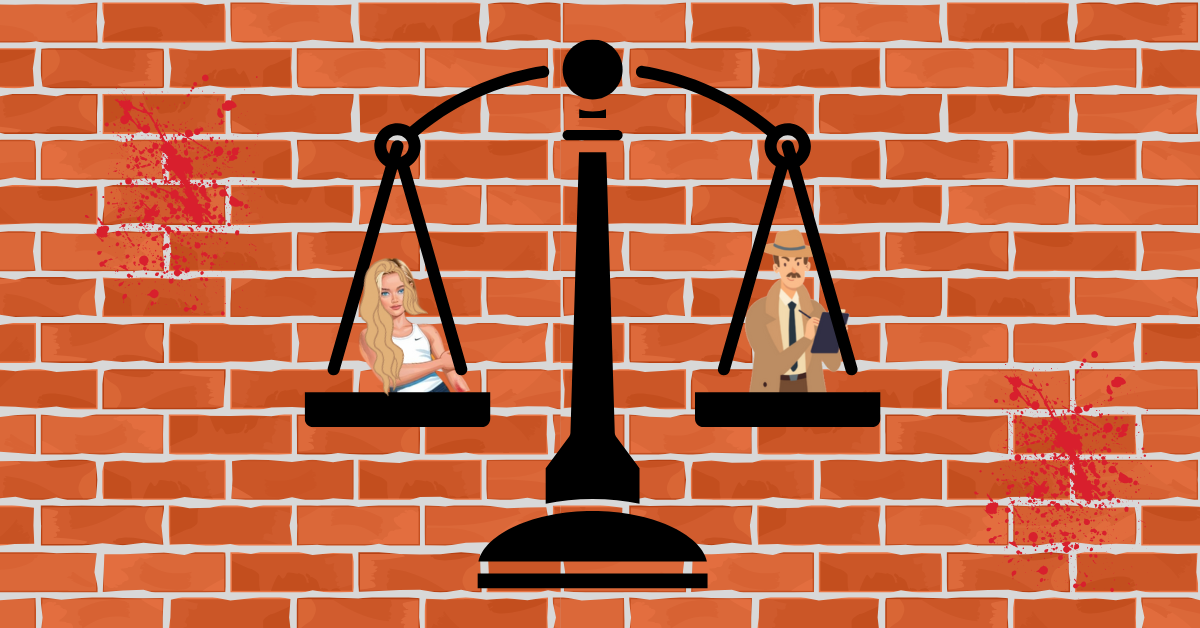
⚖️ The Brick, the Scale, and the Science
I am slowly getting to know Bob, the crime scene tech that I usually work with, better. One day soon he’ll have some information about me. I do not know if I will come out squeaky clean. I might be sharing the same prison cell as the killer in Mishaps.
I’m innocent. I’ve been set up. It was my doppelganger. Or so I think.
Well, back to the latest convo with Bob. He is either a genius or one loose wire away from creating a Frankenstein. Yesterday, he gave me some insights into what happened when they tested the brick in the lab. The brick found next to the dead woman under the sheet fort.
Here’s what Bob told me. He knows that science wasn’t my strongest suit in school. I think that is why we are friends. He likes to teach me. In a nice way.
“Measure its mass, Ned. Then dunk it in water. Whatever volume of water it displaces? That’s its volume. Divide mass by volume and you get density.”
I let him talk. Hey, science is cool. Just too much math.
Then he got to the part where we all knew it was murder.
“If this brick had fallen from the dresser, it would’ve caused a straight-down impact. But the drip trail patterns… they suggest she moved after the injury. That’s not how sheet-fort accidents go.”
🧩 Something Doesn’t Add Up
In other words, the brick played its part — but not alone. This wasn’t a simple accident. And everyone at that beach had something to hide. Especially the ones claiming to be victims of “random mishaps.” The only random thing here is that I haven’t arrested the whole lot.
The sheet fort. The brick. The not-so-innocent explanations of a group of vacationers with strange injuries. As for me? Remember, I’m not just chasing the truth. I’m being chased by it. Bob’s getting close to revealing secrets about me, and I’m not sure I will like what he’s finding.
– Ned
🔬 Crime Scene Tech Tip:
Want to test whether an object could realistically cause blunt force trauma? Calculate its density. First, weigh it. Then, submerge it in water and measure how much water it displaces to find its volume. Density = mass ÷ volume. Higher density = greater impact force. It’s not just physics — it’s forensics.
🧠 Your Turn:
Think the brick was planted? Was it an accident… or murder in disguise? Read and find out! Mishaps is out on Amazon, but also find it in ebook format on Barnes & Noble and other platforms.
Don’t forget to like if you’re digging these dark little detours.


Ned wants to know… What do you think? Leave your evidence below. 🕵️♂️